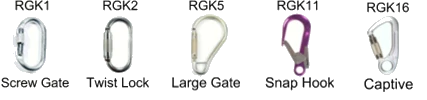

All Ridgegear Lanyards are available with any of Ridgegear Karabiners (View RidgeGear Karabiners) please call for details and price.
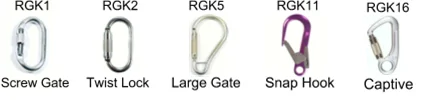
RGL1 Lanyard Connector Options
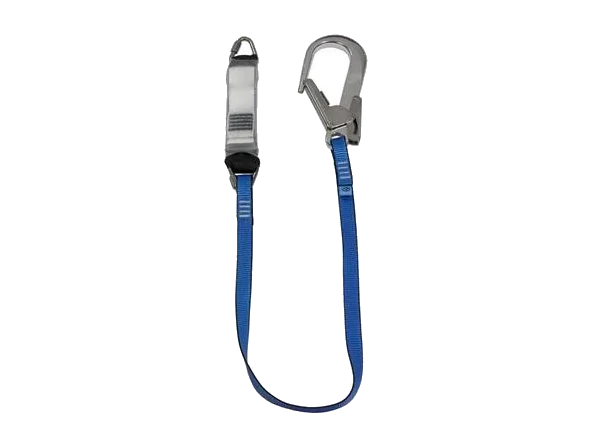
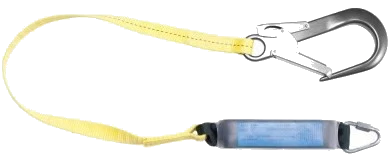
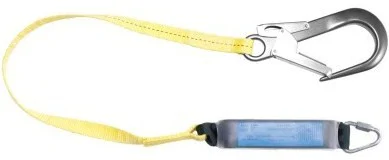
RidgeGear RGL1 Webbing Shock Absorbing Lanyard
The RidgeGear RGL1 Webbing Lanyard is supplied in two standard lengths: 1.3M and 1.8M
The RidgeGear RGL1 lanyard is an industry standard, and normally the minimum equipment issued with a harness for working at height. The webbing used in the manufacture provides greater strength, wear and shear resistance compared to other webbing. It is also treated with a water repellent coating which should extend the life of this product.
The RidgeGear RGL1 lanyard should be used when the operative is working from a static position, connected to a fixed anchor point. If movement between anchorages is required, a twin leg lanyard should be used (RGL3 webbing or RGL8 Rope), to provide constant protection.
The RGL1 lanyard is fitted as standard with the RGK12 Delta Link at at the shock absorber end, altough this fitting can be changed upon request.
RidgeGear RGL2 Lanyard Connector Options
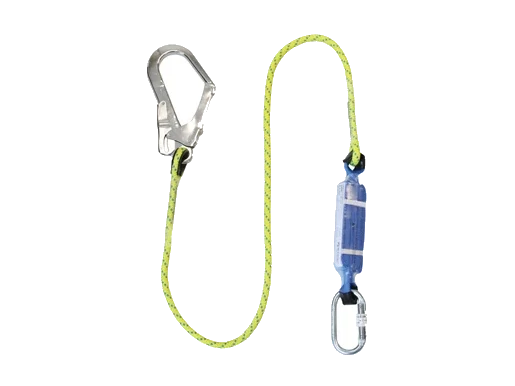
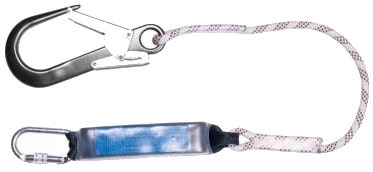
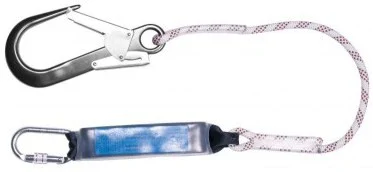
RidgeGear RGL2 Rope Shock Absorbing Lanyard
The RidgeGear RGL2 rope lanyard is supplied in two lengths: 1.3 M and 1.8 M
The RidgeGear RGL2 rope lanyard is of “traditional” type, using a five tuck spliced rope fitted with thimbles at each end. The lanyard is fitted with a standard shock absorber pack, even though the rope itself has some shock absorbing capacity. The rope used in the manufacture of this lanyard, shows some resistance to alkalis, oils and organic solvents.
The RidgeGear RGL2 rope lanyard should be used when the operative is working from a static position, connected to a fixed anchor point. If movement between anchorages is required, a twin leg lanyard should be used (RGL3 webbing or RGL8 Rope), to provide constant protection.
The RGL2 lanyard is fitted as standard with the RGK12 Delta Link at at the shock absorber end, altough this fitting can be changed upon request.
Users of Energy Absorbing, Fall Arrest Lanyards, should be trained in its safe use and the applications it is designed to be used in. This should include selection of connectors, selection of a suitable anchor point, pendulum swings, use over an edge and free space requirements.
All fall protection equipment made from synthetic fibres available for use by an employee should be inspected by the User prior to use each and every time it is used (for which they should have been trained to do so) and at least every 6 months should be subjected to a Detailed Inspection by a competent person. The actual frequency of the Detailed Inspection by the competent person should be deemed through ‘risk assessment’ taking into account the frequency of use and the environment it is being used in. The competent person carrying out the Detailed Inspection should have specific training to inspect fall protection PPE.