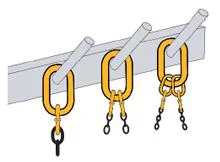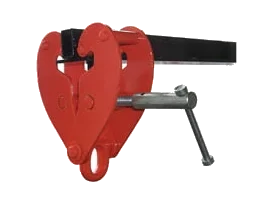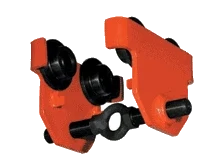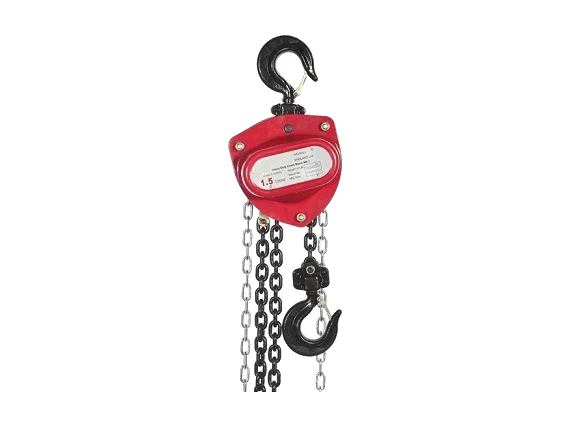
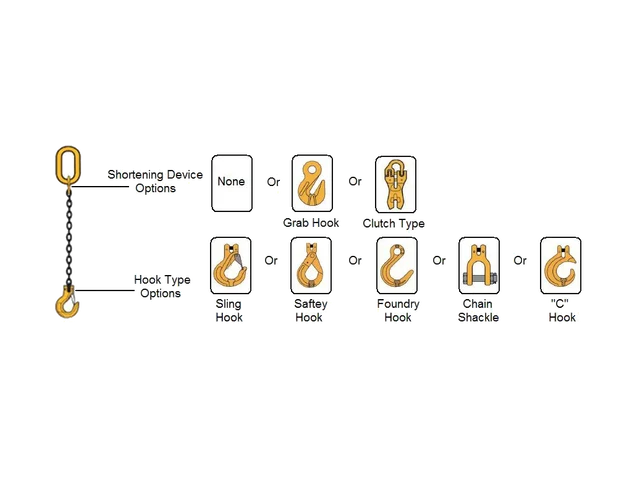
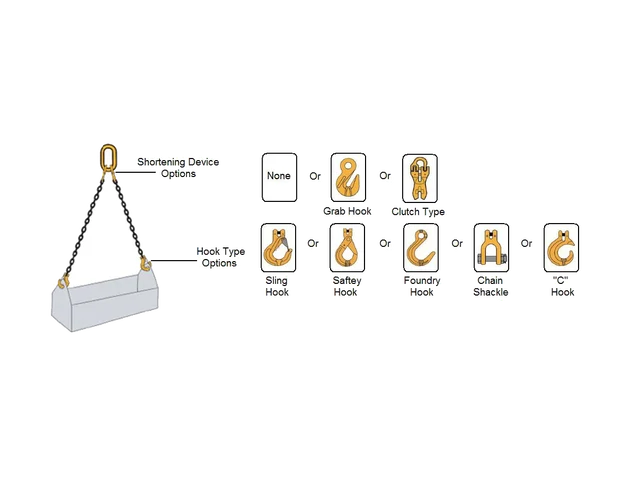
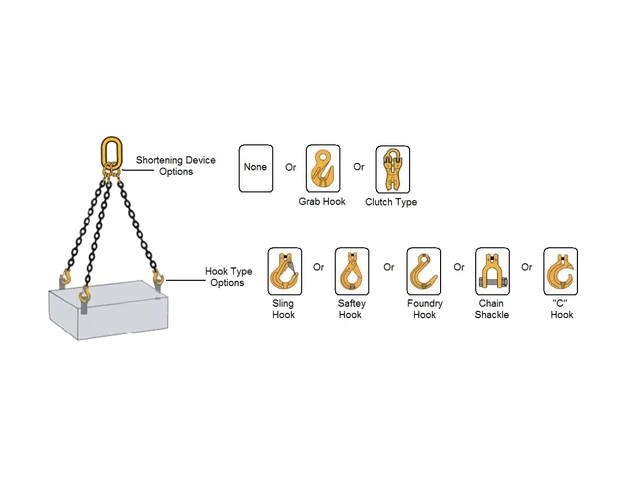
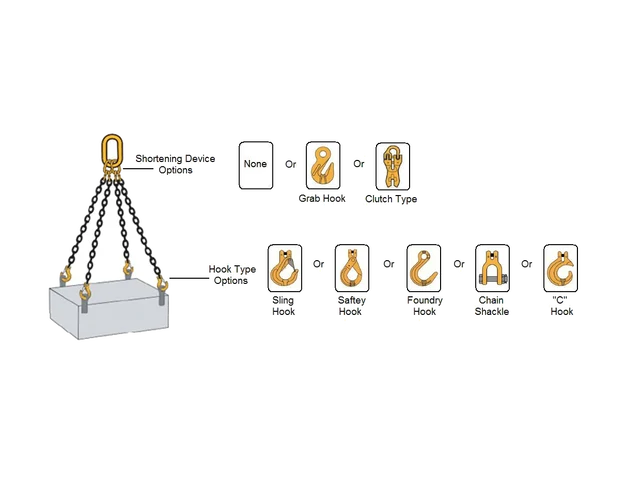
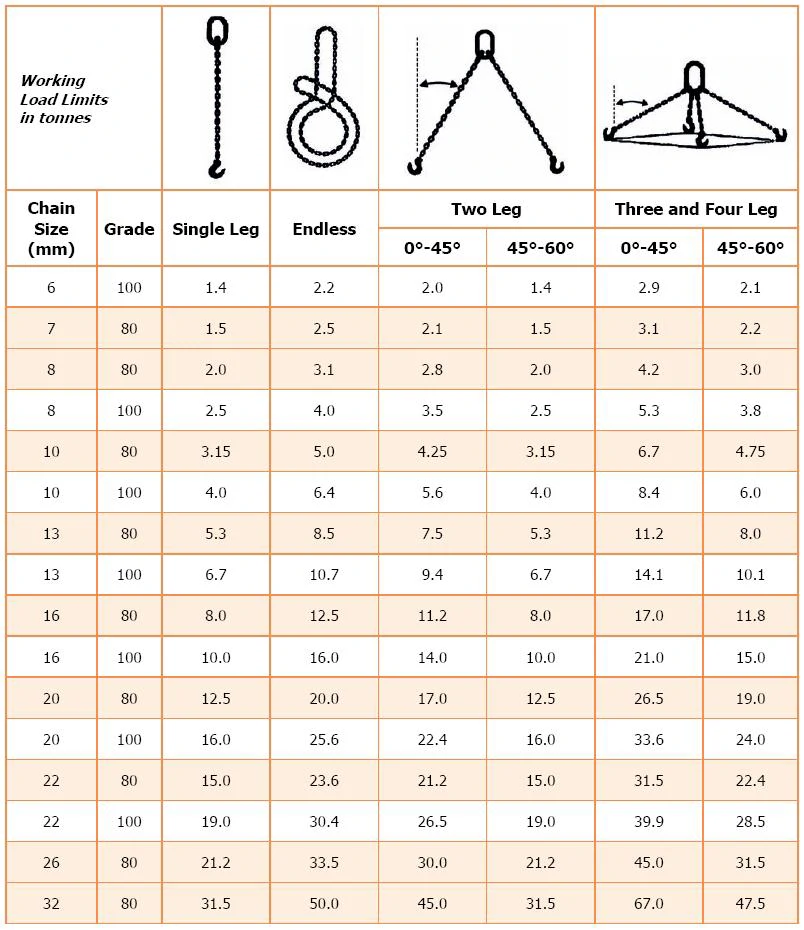
Chain slings versatile piece of Lifting Equipment which can be assembled to meet your own requirements. Assembled in five different formations to suit most lifting application, choose which type will suit your requirements - Single Leg Chain Sling, Two Leg Chain Sling, Three legs Sling, Four Leg Chain Sling or the Endless Chain Sling. To determine what size chain you will require on your chain sling to suit lifting application just refer to the grade `T` 8 chain sling safe working load chart (below) and match both the formation and the required safe working load and this will tell you the chain size that is needed. To complete the chain slings that will match the requirements of your lifting application choose what type of fittings you need, whether or not you need the ability to shorten the chain sling and what type of hook will be suitable for your lifting application. Then click on the link to the right of the screen choosing Single Leg Chain Slings, Two Leg Chain Sling, Three Leg Chain Sling or Four Leg Chain Sling where you can choose from a range Chain Sling options to buy online or contact our sales team who will be happy to provide any further assistance, advice or quotation for your consideration. (T) 01427 891115 or email sales@liftsafesolutions.co.uk
Chain Slings Grade 80 & Grade 100
Chain Sling Grade 80 & Grade 100 Safe Working Load Chart
Uniform Load Method of Rating Chain Slings BS EN 818-4
All general purpous slings should be rated by the uniform load mothod as shown in the table below
Safe Use of Grade 80 Chain Slings
As with all lifting equipment, chain slings should be inspected by a responsible person before each period of use. if a defect is found the chin sling should be returned to your local distributor where a competent person will repair the sling.
Chain slings are classified as a "lifting accessory" and are covered by LOLER. As such all chain slings should be thoroughly examined by a competent person as periods not exceeding 6 months. (contact our sales team on 01427 891115 for more information)
Chain slings should not be used unless they are accompanied by a valid declaratuin of conformity or a certificate of thorough examination.
| Temprature of Chain | Reduction in Load Limit While Heated | Permanent Reduction In Working Load Limit |
| -40 to 200 Degrees C | None | None |
| Over 200 to 300 Degrees C | 10% | None |
| Over 300 to 400 Degrees C | 25% | None |
| Over 400 Degrees C | DO NOT USE | DO NOT USE |
Acidic Conditions
Grade 80 Chain Slings should not be in or near acidic or caustic solutions due to the risk of hydrogen embrittlement.
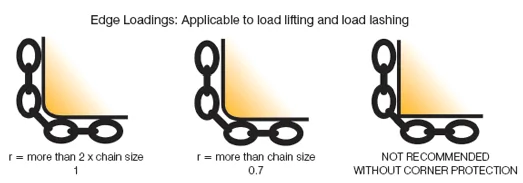
Edge Loading and Packing
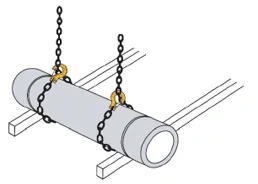
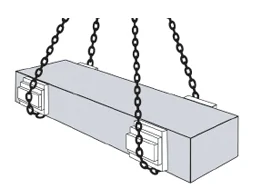
Chain is designed to support a load in a straight line. Never tie knots in the chain and always make sure chain is free from twists before putting it under tension. Where chain has to pass round sharpe corner use suitable packing to give the chain protection.
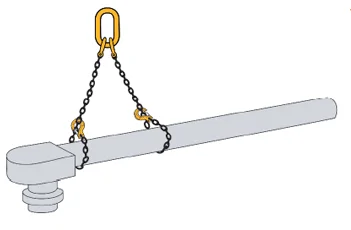
Balancing the Load
To ensure a level lift the crane hook should be verticalabove the centre of gravity of the load. If in doubt, lift just clear of the ground. If the load tilts, land the load and re-position the sling.
Landing the Load
Always have a prepared landing site ready to receive the load. Never lower the load onto the chain. If necessary use timber battens to rest the load on so that the chain may be easily pulled from under the load.
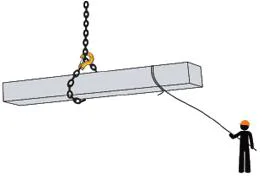
Controlling The Load
Slingers should attach a tag line to control the movement of the load during the lift.
Sling Storage
When lifting operationsare finished, Chain Slings must be stowed on a purpose made rack where they will be safe from damage.